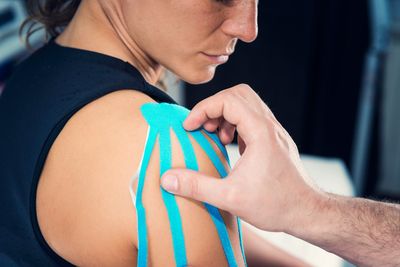
Kinesiotaping is a therapeutic technique that uses a flexible, elastic adhesive tape designed to mimic the thickness and elasticity of human skin. It is applied strategically to muscles, joints, and soft tissues to provide support, reduce pain, and improve functional movement without restricting range of motion. Unlike rigid athletic taping, kinesiotaping allows for normal movement while offering continuous sensory input to the nervous system.
The tape works by gently lifting the skin, which may decrease pressure on pain receptors, improve local circulation and lymphatic flow, and enhance proprioceptive feedback. Depending on the method of application, kinesiotaping can be used to facilitate or inhibit muscle activity, support joints, reduce swelling, and assist with postural or movement retraining. It is commonly used in rehabilitation, sports medicine, and integrative care settings for musculoskeletal injuries, chronic pain, postural dysfunction, and performance support, often as part of a comprehensive treatment approach.
Benefits of Kinesiotaping
- Pain Modulation
Kinesiology tape gently lifts the skin, which may reduce pressure on nociceptors and improve sensory input, helping to decrease pain through neuromodulatory mechanisms.
- Support Without Restricting Motion
Unlike rigid athletic tape, Kinesio Tape provides dynamic support while allowing full range of motion, making it suitable for both rehabilitation and athletic performance.
- Improved Circulation and Lymphatic Flow
The elastic properties of the tape create microscopic skin lifting, which can support blood and lymphatic flow, helping to reduce localized swelling and bruising.
- Enhanced Proprioception and Neuromuscular Control
Tactile input from the tape may improve body awareness and muscle activation timing, supporting better movement patterns and postural control.
- Muscle Facilitation or Inhibition
Depending on application technique and tension, Kinesio Tape may help facilitate underactive muscles or inhibit overactive muscles, supporting neuromuscular balance.
- Joint and Soft Tissue Support
The tape can provide subtle positional support to joints and soft tissues, potentially improving stability without limiting functional movement.
Common Uses of Kinesiotape:
Kinesiotape is commonly used in both clinical and athletic settings for:
- Acute and chronic musculoskeletal pain
- Muscle strains and overuse injuries
- Tendinopathies (e.g., Achilles, patellar, rotator cuff)
- Joint instability or mild sprains (e.g., ankle, shoulder, knee)
- Postural support and movement retraining
- Edema and lymphatic congestion
- Sports performance support and injury prevention
- Post-surgical or post-injury rehabilitation (as appropriate)
Kinesiology tape is most effective when applied as part of a comprehensive treatment plan that includes manual therapy, corrective exercise, and movement education.